This memory about being bullied resurfaced while I was trying to understand why I fear MRI machines.
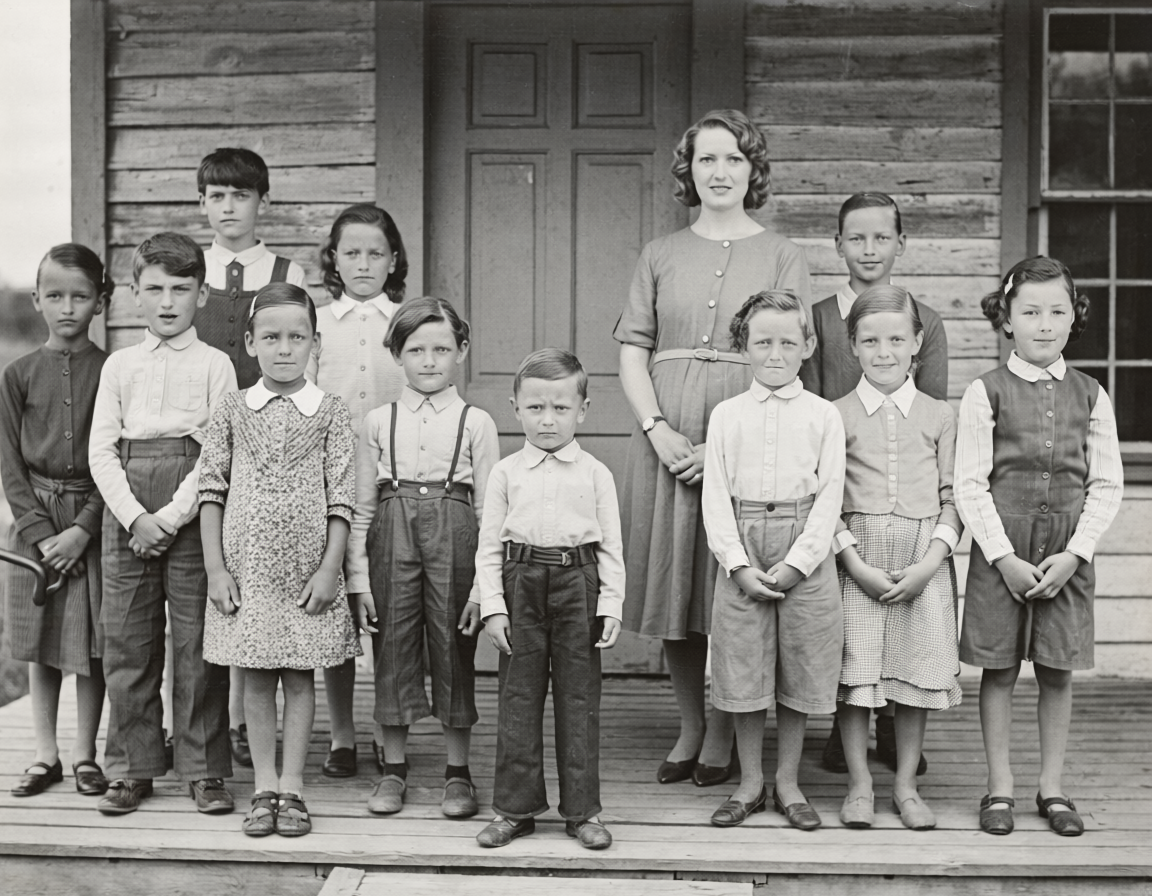
Image generated in Adobe Firefly from my prompts. I have a photograph of my classmates and teacher from second grade that would work very nicely here but it’s in a box that I can only describe as somewhere.
“Examine class photographs of children. Can you pick out the bully? Sometimes. Can you pick out the bullied? Almost always.”
“I have heard there are troubles of more than one kind. Some come from ahead and some come from behind. But I’ve bought a big bat. I’m all ready you see. Now my troubles are going to have troubles with me!”
– From I Had Trouble in Getting to Solla Sollew by Dr. Seuss
Examine class photographs of children. Can you pick out the bully? Sometimes. Can you pick out the bullied? Almost always.
All of my class pictures from elementary school had one thing in common: I was always in the front row, the smallest boy in the group. That did not change in junior high. It was there, as if preordained, that my place in the school’s social order was to be a target for bullies.
For most of my youngest life, however, my slighter stature did not matter. I ran with the neighborhood kids. We played ball games as well as imagination games based on books, comics, or 1950s TV. We built wet-season rafts and battled in the creek. We climbed trees and constructed a substantial clubhouse out of bricks and other scrounged construction materials behind the huge garage my father built.
Still, I was pretty soft compared to some of my peers. I liked to read and draw cartoons. Musical, I became a band nerd. My parents just supported my interests and did not try to mold me into a stereotypical Texas kid.
As far as I was concerned, I lived an idyllic childhood.
But the idyll ended with junior high and hormones. I was not only short, I was among the youngest in my grade, having barely made the age cutoff for first grade. Therefore, my hormonal debut lagged behind the other kids. That was expected with the girls, but the boys got their growth spurts ahead of me, too.
Outside of the occasional bump-and-run in the hall that sent my books flying, the bullying did not happen in the school building. Some of my friends were the school’s highest-status girls. They liked me. If a bully attracted their wrath, it was enforced by a sizable athlete boyfriend.
But on the streets, I was on my own. There, and in the all-boy world of gym class.
Enter my nemesis, Jimmy. He started harassing me in seventh-grade like a walking, talking thesaurus dedicated to synonyms for the word small. The name-calling soon escalated to shoving, tripping, and throwing balls at my head and face while I wasn’t looking.
In the first semester of eighth grade, popping me in gym class no longer satisfied him. Jimmy decided to torture me.
He ambushed me from different points along the route to my home. I tried to escape when I saw him; however, I rarely outran him. When he caught me, he twisted my arm way up behind my back and jerked my body around into increasingly forced contortions.
The abuse lasted all the way to his home, which was two blocks past my intended destination. As we neared his house, he capped the session by pushing me as hard as he could into a tree, a wall, or down to the ground.
After he left, I picked myself up and retraced our steps, gathering my strewn school materials. I didn’t mention what happened when I got home.
I don’t know if I kept silent out of embarrassment or from just accepting my fate. However, not stopping the abuse in one way or another left a shameful mark on my forehead that, although invisible to parents and teachers, was easily seen by my fellow students.
That mark proclaimed me a victim.
Once labeled as a target, knocking books out of my hands in the hallways increased from a single wag to a wider array of boys now emboldened enough to take a shot at me.
Even a friend from my very young days felt free to bully me. He liked to throw an elbow at me whenever we passed in the hall. His girlfriend got in on the fun by digging me with suggestive, insulting comments.
Then came the burrito.
Toward the end of the school year, Jimmy and a couple of cohorts isolated me in the gym just before the first of two lunch periods. They threw me down onto a thick floor mat and rolled me up. Instantly trapped, I was unable to move my arms or legs. No one responded to my muffled cries for help.
Jimmy and his friends walked away snickering.
Inside the burrito, it was intensely hot. My panic and struggle only made it hotter. Battling to breathe, I felt as helpless as a paralyzed insect wrapped in silk by a spider.
A long while later, I heard voices from the far end of the gym. By stretching my neck out as far as possible, I caught a glimpse of a few people as they went through the door. I yelled as loud as I could but they were already gone.
What followed was an eternity of terrifying immobility. I may have passed out.
Finally, a coach saw the top of my head in the burrito and unrolled me. It was like being reborn. I lay on the gym floor with my arms and legs splayed wide. I choked and gasped for breath.
The coach stayed with me as I recovered. When I was able to speak, I told him what happened. He chuckled and said that I looked OK and that it was just a prank.
He said, “Boys will be boys.”
After that non-response, the coach just went on with his day, leaving me traumatized, very angry, and soon to discover that I missed lunch entirely. Adding insult to injury, my next period teacher reprimanded me for showing up late.
When school let out, Jimmy jumped me just outside the gym door. He called me “burrito boy” and wrenched my arm harder than ever.
I shook with the rage of a trapped bobcat, frantic and dangerous.
Seeing some sports equipment in the grass, I executed a painful, desperation-fueled spin and broke his grip. I jumped onto a baseball bat and back to my feet, threatening him with it.
Jimmy laughed at me, of course, but he had the good sense to start running. I hurled the bat at him with everything I had. It landed, blunt end first, in the middle of his back.
He went down hard. Very hard. For a moment, I thought I killed him.
Then, in front of a dozen or more students, he lifted himself off the ground and scampered away, crying and threatening to tell on me as he ran.
Watching him flee from my takedown felt good. My pain, terror, and rage dissipated into an almost surreal calm.
I scanned the stunned faces of the students who witnessed my brief rampage, picked up my stuff, and walked home in peace.
That evening, my parents got a call from Jimmy’s parents. Following the call, they talked in hushed tones before confronting me about the incident. I told them how my nemesis made every afternoon after school a torture session.
I proudly owned up to flattening the jerk.
Despite some slight admonishment about the danger of taking a bat to Jimmy, they did not lecture me. Instead, my father, a Marine veteran of World War II, immediately began training me in self-defense.
Dad’s care and instruction gave me confidence. Even so, we agreed that I was not destined to be a pugilist of any kind.
Word about my confrontation with Jimmy spread through the school like a kindergarten virus. A few guys started calling me Batman and, to my amazement, all hazing stopped.
Embellishments must have been added to the story somewhere along the grapevine.
Over the next school year, ninth grade, I began to develop my father’s physique. By the end of the year, I was becoming stronger and a little taller. By this time, I didn’t feel like someone who was bullied.
In high school, life was good. More physical, I ran three miles almost every day, did ranch work in the summer, and played in an independent football league in the fall. I progressed from being the friend of high-status girls to dating them.
I quit school band, took up guitar, and formed a pop rock group with two friends.
Initially composed of two guitarists and a percussionist, the combo needed a bass player. Rick, our drummer, invited a prospect to an early rehearsal.
During our final year in junior high, Jimmy was nothing more than a peripheral presence. I never saw him at all in high school, so it was a shock when he appeared at Rick’s front door.
He stepped inside, saw me, and stopped cold. I froze, too, not knowing how to react.
Jimmy spoke first. He said he regretted being a bully and treating me so poorly. He added that his back hurt all summer.
I couldn’t contain a self-satisfied smirk when he said he couldn’t move very well during that time.
His apology sounded sincere which I thought was big of him. Nevertheless, I needed to let this situation sit in my mind for a moment. I still wasn’t sure that I had extracted enough revenge.
Rick did not know my history with Jimmy. Keith, the other guitarist, did. His already big eyes opened wider as possible scenarios played out in his mind.
For a long minute, I said nothing.
Rick’s face broadcast his confusion about the strange vibes.
Eventually, Keith broke the tension with a nervous laugh.
I looked at my bandmates and shrugged my shoulders.
“Let’s see what he can do,” I said.
And that was that. Although I felt very good about turning on and defeating my oppressor, it felt just as good to let bygones be bygones.
But, because I could have very seriously injured him with the bat, I also apologized. However, I hedged my apology with the reminder that he deserved that payback.
Then life went on and, as it does, buried my junior high trauma under an avalanche of memorable experiences.
It was not until decades later, when medical conditions demanded I undergo MRI and PET scans, that I realized that the mere thought of squeezing my body into the narrow holes inside those huge machines scared the bejeebers out of me.
My doctors helped me deal with the fear, but I wondered why I developed it in the first place.
This story, this self-psychoanalysis by exploring and writing down my memories, answered that question: Burrito Boy Claustrophobia.
So, Jimmy, wherever you are, thanks no thanks for the emotional scar.
I still forgive you.