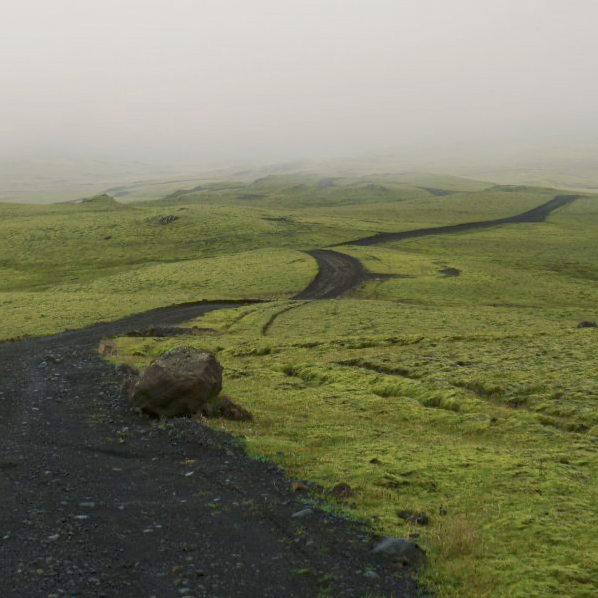
This story explores the contradictory soup of friendship, love, and the imperative of ambition among and within those who must create art.
Image from a photo by Katarzyna Gonsior on Unsplash.com.
As summer ended, my friend and I suspected for the first time what everyone around us already knew: we were holding on too long to the pleasures of a college town.
Once more, our girlfriends matured and flew away, leaving us alone except for the solace we gave each other. Together, we could enjoy the pretense that these rejections were just la vie and that we didn’t ache from the cleaving of these evanescent fusions.
Yet experience with love and loss shaped each act of our romantic opera, including the flicker of hope at the end of September’s dark tunnel. Each new school year brought an influx of first-year students, upper-level transfers, and newly hired educators and administrators flooding the campus and local housing.
There was always a chance we would enjoy flirtatious intrigues and, maybe, fall in love again.
* * *
Over the past few years, my drawings and oil paintings sold well. In that same time frame, my friend advanced through the ranks to chef de cuisine at a respected bistro. Our friends called us The Painter and The Chef to match the partly tongue-in-cheek heroic personae we adopted as we set career goals. We hoped these visualizations would help us achieve our aims, even as we realized, with a laugh, that such ideas were a little pretentious.
As I developed the character of The Painter, I entertained no concern that the persona could become as assertive, or more so, than its creator. With my friend, The Chef, he and his professional identity were entirely the same.
The Chef, master of an intoxicating cafe, delighted in subjugating the senses. Intentionally, he let experience pass through his grasp, creating with the purpose of obliteration.
He and I, and our friends and lovers, consumed it to excess.
On the following mornings, the pair of us occupied two realities in the same world. I, The Painter, wracked with bodily and emotional pain, and The Chef, ignoring his hangover, eager to do it again.
My friend believed every day was like a zephyr over a road wandering through the unknown, while I thought of each day as the frozen abstraction of an existential highway leading to a point somewhere beyond the horizon.
That’s what I tried to express with oil and pigment: bending the visual with pure will in an effort to define existence. The Painter believed that perfect perception was not just an idle thought.
We both, The Chef and I, loved our journeys. Yet, somehow we knew that lives like ours can burn away all too fast, searing the soles of those who follow such a scorching trail. Nevertheless, we sought to live as a cosmic explosion of young manhood, trying to light up the universe before it was too late.
* * *
That September, like many of those before it, was gray with grief as we mourned the loss of our recent loves, but it drove us to create.
The Chef captained his kitchen with an extravagance that produced ever more inventive dishes. I spent long, meticulous hours at my easel, getting closer and closer to my vision with every canvas.
Sara, a former Juliet, long tired of our shenanigans but in love with us still, knew well of our creative calendar. She found herself in a position to present a light into our world.
Into my world, specifically. That light was Astrid.
One night at The Chef’s cafe, Sara looked into my eyes with the hope and misgivings of a devoted mother and said, “A friend wants to meet you, God help her.”
A beautiful woman with Godiva-gold hair and blue eyes like stars from a distant galaxy stood just inside the doorway. So young.
Sara called her over and introduced us.
Astrid seemed too pretty, too gentle, too in touch with her feelings to be the paramour of The Painter. I knew that part of me, and I saw it immediately. But oh, how this precious gift beguiled me, and how quickly I feared losing myself to her.
That night, the usual crowd collected, bantered, ate, and drank at our friend’s cafe. The Chef, also taken by the new girl’s charms, was miraculous. Nevertheless, he was merely emcee to the main act.
After closing, the party moved to my studio. Bards brought wine, herbs, and improvised tales that segued into drums and songs. Artists and scholars argued the arc of history.
Joy, like a downy duvet, warmed us.
Well before dawn, I bid my comrades farewell. Locking the studio door, I realized a golden figure sat on the blanketed couch. Astrid blushed and smiled with a little giggle.
She said, “I’m still here.”
Taking the first step on what I recognized as a winding road to a vague destination, I sat beside her.
She seemed to turn serious, but couldn’t hide a coy smile. “Earlier, you spoke of Blake and Kant,” she said. “Tell me again how they figure into your work.”
Ah.
Falling into passion, I could not help but become enveloped by Astrid’s radiance.
Soon, talk of art replaced action. Canvases sat unchanged and pigments dried on the palette. Like the husk of a cicada flown away, The Painter felt abandoned.
I remained male, of course, unable to admit that anything was amiss, destructive, or smothering, even as I felt the cost of pretending otherwise.
Astrid, for her part, possessed no tendency to doubt. She loved our abstract conversations, her bicycle on sunny days, and her friends The Painter was pained to meet. She loved to swim, to laugh, to make carefree love in a frosty clearing in late November. She loved that I wished to be near her always.
Astrid loved love. She did not wonder why I no longer painted.
* * *
The Chef was my cosmic twin, so Astrid embraced him as well. When The Painter grew heavy, they could confide and enjoy relaxed good cheer. She could be comforted by his hearty affability. She could laugh with no malice at his foolish dalliances.
Yet, while The Painter stewed from inactivity, I was in a bubble of delight. Astrid was a movie I watched every day, always the same yet ever new and intriguing. I was happy. Happy to exist. Happy to be admired for my intellect. Happy to stoke each merging of profundities into sexual combustion, ignoring what this joy was costing The Painter.
Beneath December’s fallen leaves, the trail persisted. The Painter needed to draw the reality nipping at my heels; needed to become heady on linseed oil; needed to be the self-creation we were. The Painter needed, needed, yet I felt I had all I could want.
Astrid lived for each season, but the holidays more than the others. An icy nose. Carols in malls. The welcome touch of her parents’ adoration. She enjoyed a bliss that could be mine if The Painter would play along.
Yet lightning struck no less random and destructive than the tongue of The Painter in torment. Our blissful life alternated with anger and apologies, each turn making us fear what we were becoming.
* * *
An hour or so into the new year, my studio was the promised land for post-partiers, weary servers, and musicians tired of the Auld Lang Syne. They came through the streets, parks, and alleys. From black box theaters and auditoriums hot with electronics. From dance halls and candlelit restaurants. From the present and past. We greeted them on the landing as a pair, Astrid and I.
An old friend kissed me on the cheek and spoke of my companion’s beauty. I glowed, maybe not a little from smoldering unease.
The Chef, wrapped in colorful woolens, approached with his crew, who ferried trays of sumptuous fare. He bade his people take The Painter’s direction, and I led them into the warmth. On the landing, he embraced Astrid and kissed her with unrestrained ardor.
Like a creation from his oven, she was ready.
* * *
I picture our tribe gushing praise for the delicious surprises from The Chef’s cafe. How we oohed and aahed at its appearance, lusted to consume at its seductive aromas, and melted inside from its rapturous flavors. He was the master, yes, but what about that which he created?
Think of the Florentine David. Does he stand more Adonis after centuries of adoring eyes? Does Mona Lisa, once thought of as a plain girl, glow more mysteriously beautiful from increasing admiration day after day? Does the dark, silvery film Casablanca become more tragically iconic with each wave of appreciation after a screening?
Made by the human ego, imbued with the human ego. Most assuredly, they would bask in glory like the human ego, and ache for more.
I could not say Astrid was a product made by perceptions of her grace, but she did not exist apart from them either. She became like a golden calf. Exalted. Loved. Feared.
As a human like any of us, she deserved none of this. However, she was not impervious to cultural myth-making. In many ways, Astrid became this styled being, expecting little more of herself.
How true it is for everyone. Even for the dichotomies within us. I created The Painter to be what he is, and in some ways he envisioned me. It is we who led each other into such fantastic caricature, becoming nothing more than shadow puppets playing our parts as if at the end of sticks wielded by an unseen master.
The drums and gongs sound. We are shadows on a screen. The eternal drama plays toward that which was willed.
It all comes out, of course.
She said The Painter drove her away.
The Chef said he could not help himself.
I said I could not help myself, either.
Following an emotional firefight, I let her go; I let them go.
* * *
Afterward, The Painter in me reemerged, but our heart was stabbed by remorse.
That wound bled throughout our body and mind. It bled into the studio. It bled onto canvases, which in turn bled into galleries.
It bled through the open wallets of benefactors seeking to feel but not to feel so acutely. It bled riches until the risk of contentment threatened.
Meanwhile, I leased a studio in the city to be in the middle of it all, to bask in the sizzling heat of temporary glory.
* * *
Meanwhile, The Chef and his new love went to California because that’s where you go before the sun sets.
They played on warm diamond beaches. They sushied and soireed among The Chef’s milieu, he drinking in the love she had to give as well as the fruit of fertile, well-drained Napa soils. Throughout the summer, they caroused along misty wine country roads until the fog that settled into the contorted valleys of Bay Area geology also settled into the folds of his neocortex.
Astrid was a hit; a jewel coddled by West Coast party culture. She adored and was adored by the suntanned amigos with bright teeth, by the muscled, wave-riding gods, and by the Midas-gifted machinators of tech magic. The Chef brought it all to her and laid it at her feet, as was his way.
To create with abandon. To create with the intent of decimation. Ever more besotted, The Chef was alone before he knew it.
* * *
The success of my ensanguined paintings brought demands on a soul weakened by disunion. Openings, parties, negotiations, and uncomfortable commitments kept The Painter and me from time in the studio. Small betrayals littered our path. Sometimes from others, usually from ourself.
Paint began to dry and crack on our cerebral palette. And as inside, so outside; a struggle to create ensued. Wandering blind as the dead, we stumbled into a desolate place.
We craved a torch of desire to illuminate the road ahead. Yet, we saw little more than the struggling phosphors of a lit match flickering in the gentle breeze of over-wanting, and the embers of an ego stroked to nothing.
Beyond the hiss of that meager illumination, I heard the faint siren song of my college town calling. I yearned for solace, a remembered tribe, and the soul ignition of shared passions.
Seeing no need to sustain an ever more hollow pretense, I folded my promotional tents and went home to bivouac within the protective walls of my old studio. Yet, I found little solace in a familiar place without my close friends.
I withdrew from everything but the daily subsistence. Attempting to work, I could only stare with the eyes of a corpse at a blank canvas.
This time, grief and solitude did not energize The Painter.
* * *
Eventually sober, The Chef, too, found his way home.
He was still tan from his adventure under the western sun, looking healthier than he felt. However, inside the appearance of a robust human lived a lost creature, a copper-clad rondeau of gloomy gravy still in love with a mirage.
Former associates in the world of cuisine brought him into their restaurants only to discard him when they realized he could no longer summon the erstwhile magic of his art. He, who once helmed the kitchen of a lauded eatery, was forced to cook in a dodgy establishment unworthy of his association.
At first, it did not matter. He was too sad to care. However, as he emerged from mooning over Astrid, another immense grief enveloped him. Not for a lost paramour, but for a love he feared was lost forever.
* * *
Early one evening the following February in the gelid texture of a winter rain, I saw The Chef on the opposite side of a familiar street. We stood among the shops, bars, and eateries on the funky yet trendy block anchored by his former cafe.
I felt cold yet yearning, and in the neon light, saw his sheepish face, inlaid with red, pleading eyes.
The Chef held out his hand to me, that gifted hand that brought new realms of delicious joy to so many.
I didn’t think my broken heart could beat again with the warm comfort of concord. Yet here, now, blood flowed through a different vein, one less choked with the pigments and oils of desirous servitude.
Even so, The Painter in me, who claimed to need no one even while in the manacles of futility, demanded we turn from The Chef and walk alone into an indifferent night.
I almost obeyed.
In many ways, the truth of The Chef’s return struck me with horror. Could I still be The Painter without the perverse sustenance of emotional discord for creative nourishment? I didn’t know.
There might be no reason to trust such a precious illusion.
To my surprise, I offered up to The Chef the black hole that filled my soul. I called out to him like a self-engulfing tsunami, “I cannot paint!”
As the rain turned to sleet, The Chef bellowed, “I am doom to my kitchen!”
Shouting to be heard above the clattering pellets, I cried, “I will feed you!”
For a minute, The Chef stood motionless in the accumulating ice.
Finally, he yelled with an emotion-broken voice, “And I will paint you!”
At that, we mutual prodigals stepped from the frozen sidewalks and met in the middle of the empty street that separated us.
We each wrapped our arms around the other.
The Chef whispered into my ear, “We walked a dangerous road and separated in forest and fog, but truly, I am your friend.”
He stepped back, held out his hands once more, and looked at them with eyes anew, as if sensing their sleeping potential.
He turned his gaze to meet mine. “You are my polestar,” he said. “I cook because of you.”
It was my turn to stand motionless and mute, awestruck by how these words clarified the underlying reality of The Chef, The Painter, and myself.
When I found my voice, I replied, “You are the goal and sustenance of my path. How could I fail to express my love for you?”
They fell again into each other’s embrace.
A warm rain of long-absent tears escaped from The Painter’s icy grasp and ran down my face, braving the cold night.